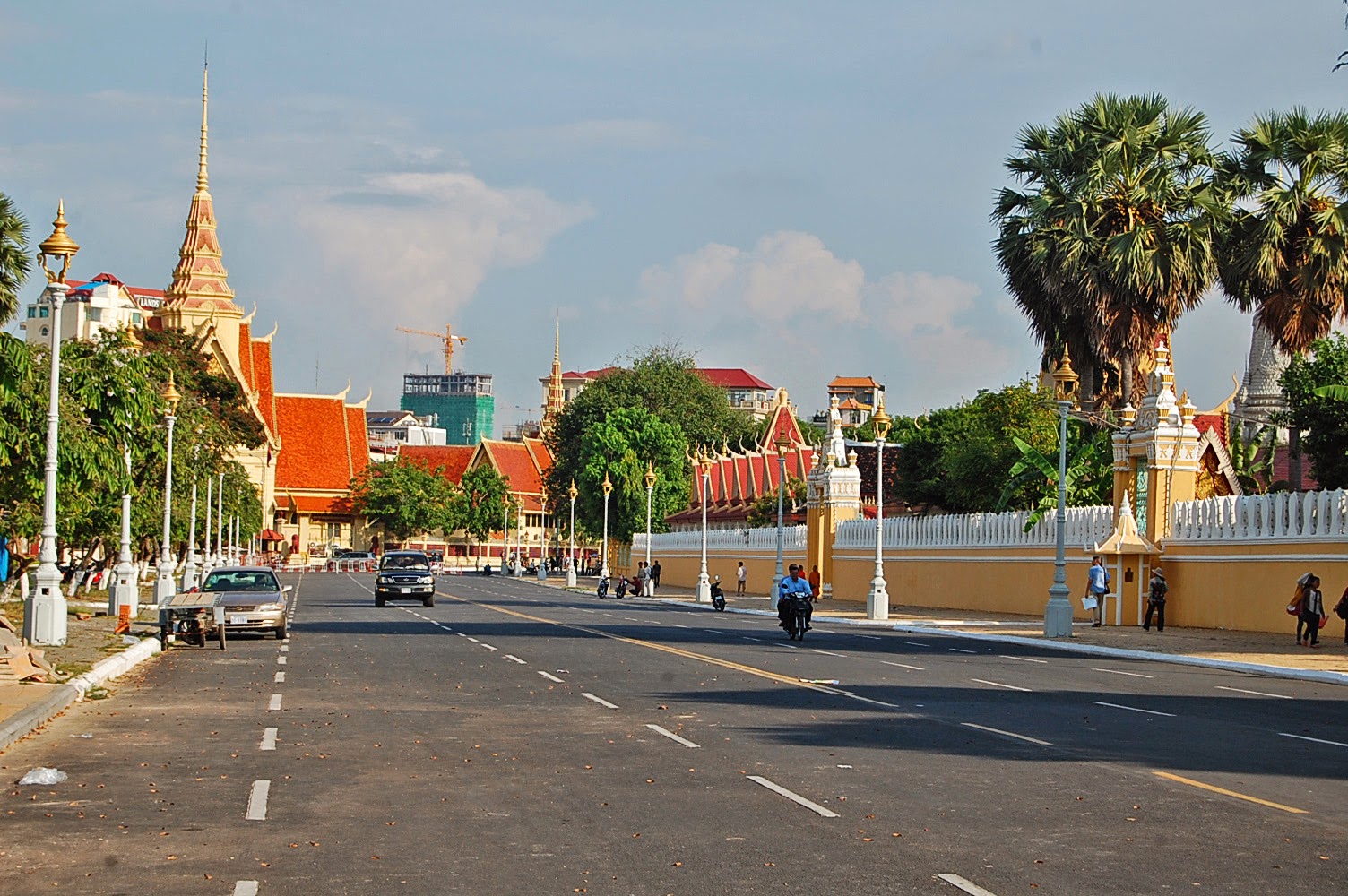
After temple-hopping in Siem Reap, Angela and I took a bus to Cambodia's capital, Phnom Penh. We were a little wary of this place as we'd heard little about it beyond stories of crime, poverty and reckless driving. Perhaps because our expectations were so low, it turned out to be safer and more developed than we were led to believe, though still very much a typical Southeast Asian bustling, dirty metropolis. It seemed dominated by the dust-filled roads that are a staple of urban Cambodia, and there were beggars on every corner, it seemed. At no point did we feel unsafe, though we did keep a tight grip on our bags and valuables, since crooks are known to ride past on motorbikes and snatch them right out of your hands.
We didn't do a whole lot of sightseeing while there, avoiding the grand palace and temples as we're a little tired of that sort of thing for now. On our second day, however, we visited the genocide museum and killing fields, both of which document and memorialise the horrific atrocities of the Khmer Rouge in the late 1970s. Both very sobering places, obviously, but clearly serving an important role in preserving such tragedies in public memory.
 |
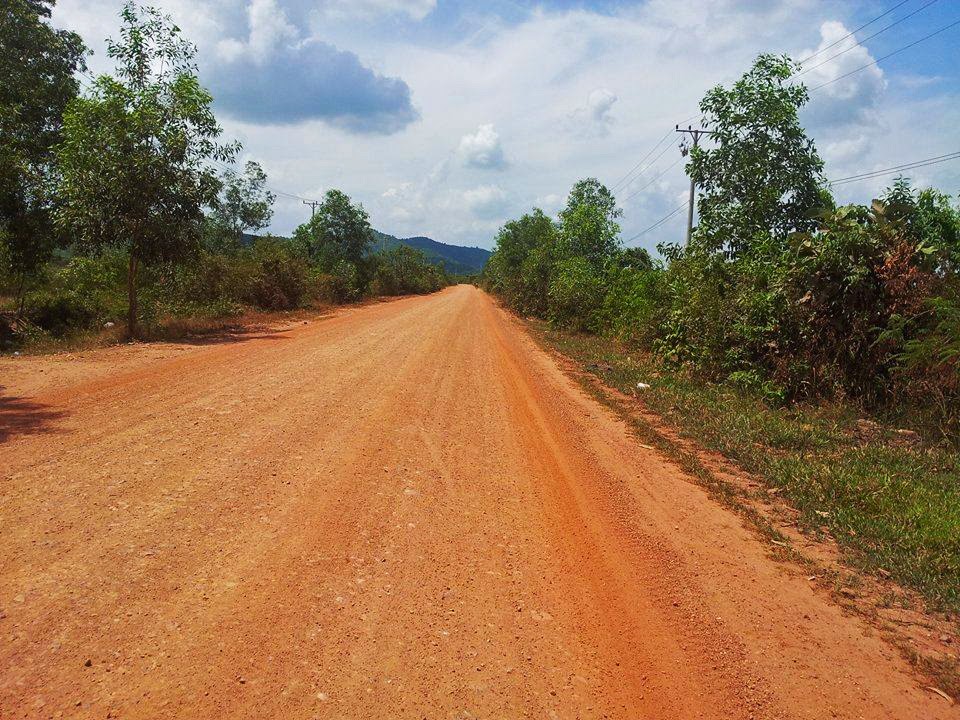
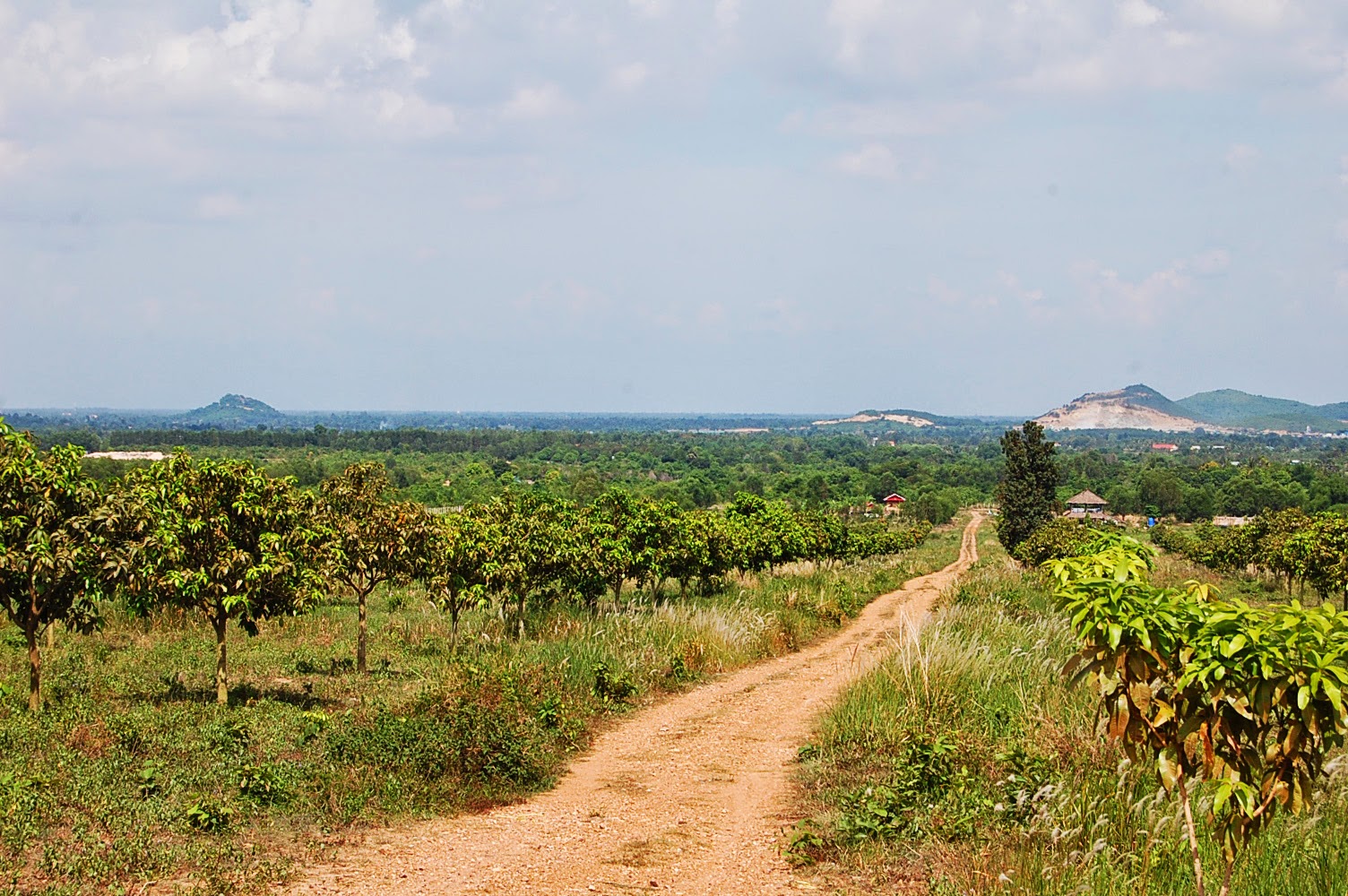
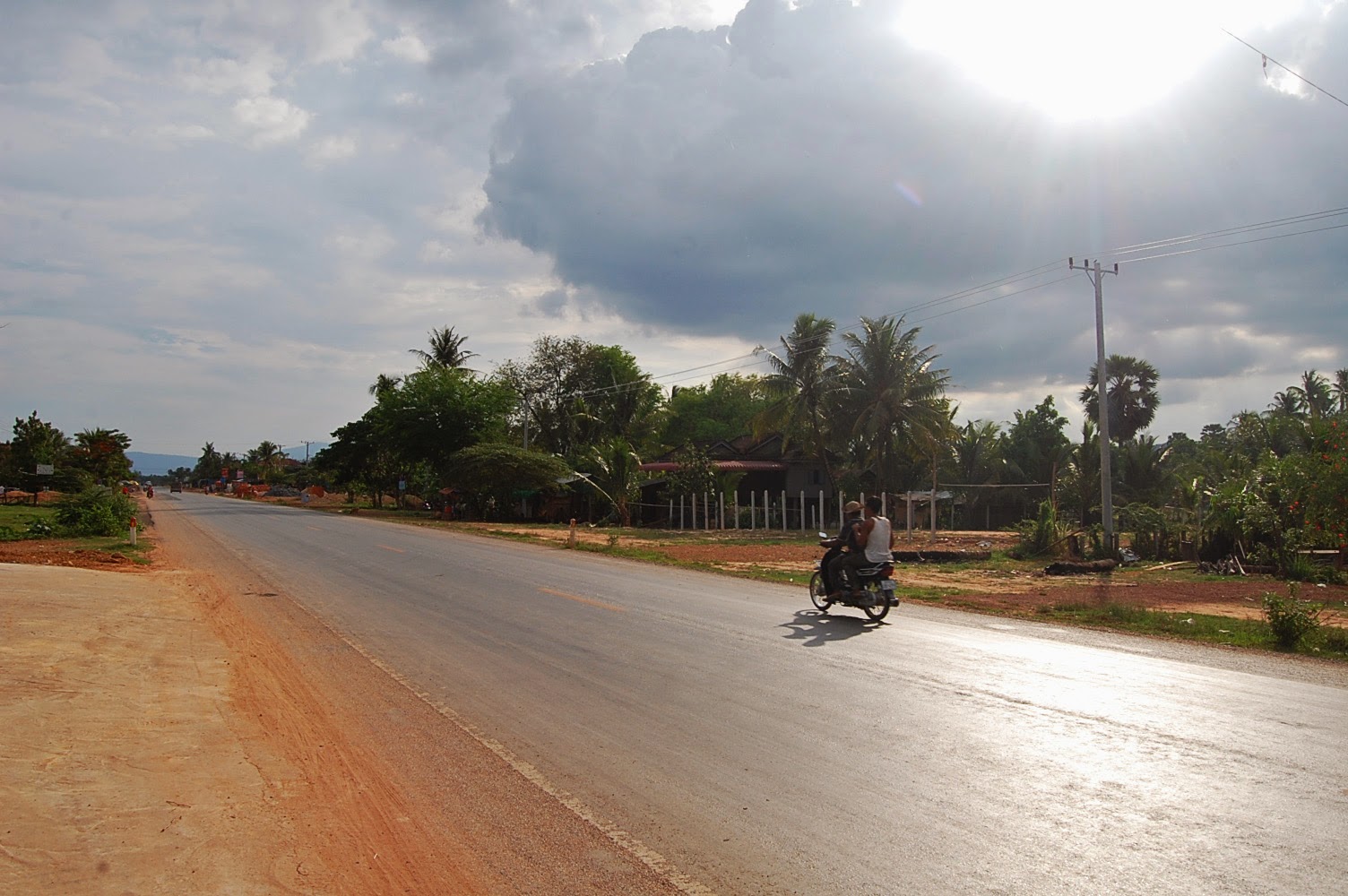
| Our bus journey from Siem Reap took about 8 hours, passing through flat, repetitive landscapes and dusty towns. |
 |
| From our bus, with its broken front window, we watched the country scroll past us. Even though the countryside is very green and fertile, many of the towns are so dusty that you can almost imagine you're in the Middle East. |
 |
| As soon as we arrived in the capital we found a tuk-tuk driver to take us to our hotel. There we arranged visas for Vietnam, as well as bus tickets to our next destination in Cambodia. |
 |
| After settling in our hotel, time for some lok lak. |
 |
| The city night market is only open at the weekends. Fortunately for us, it was a Saturday, so we had a look. |
 |
| For dessert, we had some delicious fried ice cream and fried oreos. |
 |
| The next day, our tuk-tuk driver took us through the busy Phnom Penh streets to the killing fields located just outside the city. |
 |
| Passing monuments and memorial statues. |


 |
| We soon arrived at Choeung Ek Genocidal Center, formally a mass grave or "killing field" for victims of the Khmer Rouge. This communist party, led by Pol Pot, took control of Cambodia in 1975 and set about to turn the country into an agricultural utopia, renaming it as Democratic Kampuchea and changing the official calendar to Year Zero. Its attempts at agricultural reform mostly failed, instead leading to widespread famine and disease. As if that wasn't bad enough, many city-dwellers, intellectuals and other "enemies of the proletariat" were rounded up into vans and taken to prisons to be tortured and interrogated. If they weren't killed in the prisons, they were instead sent to their deaths in mass graves that would later become known as "killing fields." Those city-dwellers lucky enough to avoid execution were sent to the countryside and forced into agricultural labour, many dying from starvation, disease or exhaustion. Pol Pot was merciless in these policies, at one time saying, "Better to accidentally kill an innocent than accidentally spare an enemy." All in all, around 3 million Cambodians died as a result of the Khmer Rouge's policies, out of a total population of 8 million. |

 |
| The site of a mass grave. |
 |
| How it looked when it was excavated in 1980. |
 |
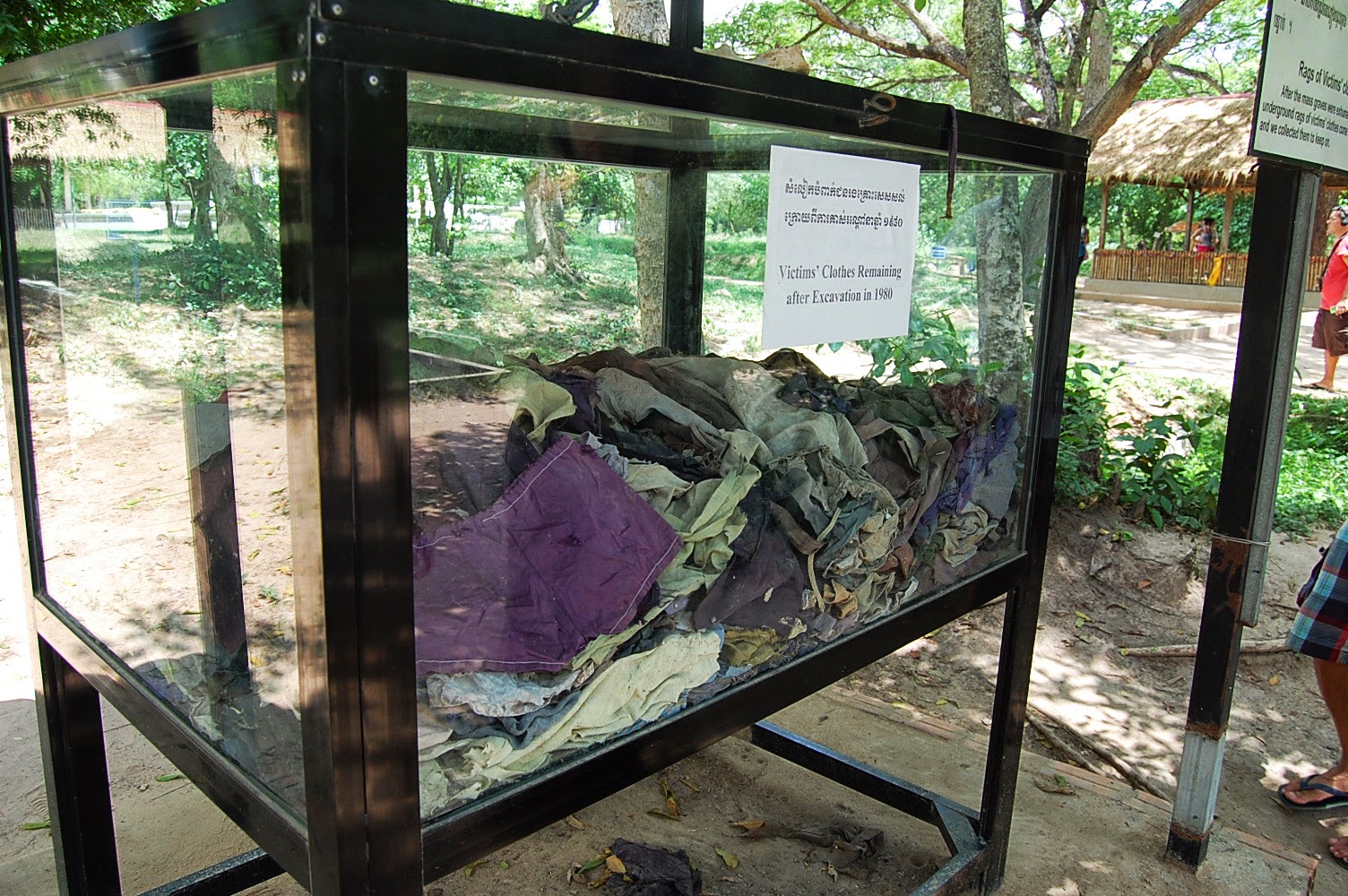
| Clothes of the victims. |
 |
| When enemies of the Khmer Rouge were executed, often their whole families were killed along with them, so as to avoid any chance of later retaliation. Officers killed many young children and babies by beating them against this tree, which is now known as "the Killing Tree." |
 |
| From this tree once hung loudspeakers that would play cheerful music to drown out the screams and suffering of those being killed. |
 |
| This Buddhist stupa contains over 5000 human skulls of Khmer Rouge victims. |
 |
| After leaving the Killing Fields we went back to the city to visit the Tuol Sleng Genocide Museum, formerly the S-21 Prison where Khmer Rouge victims were imprisoned, tortured and killed. |
 |
| Many rooms in the old prison contained these beds designed for interrogation and torture. |
 |
| A photo of a victim on one of the beds. |
 |
| Bats. |
 |
| The museum is filled with photos of thousands of different victims, including men, women and children. |
 |
| Prisoners' cells. |
 |
| There are still visible blood stains from where prisoners were beaten. |
 |
| Soon we left the museum, driving around the city and passing more monuments. |
 |
| The Grand Palace. |
 |
| For dinner: the best fish and chips I've ever had. |
 |
| The next day we went to a local dentist so I could get some fillings, each one costing just $25 each. The dentist was trained at Harvard and from what I could tell he seemed to do a pretty thorough, meticulous job, so I'm pretty happy with the results. |
 |
| The next day we went for a walk along the riverfront. On the left you can see where the Tonle Sap River meets the mighty Mekong. |
 |
| Wat Ounalom. |
 |
| Phnom Penh was once called the "Paris of the East," and many of its old French colonial buildings are still visible today. |
 |
| Back at the Grand Palace. We didn't go inside, but we did walk around its outer walls. |
 |
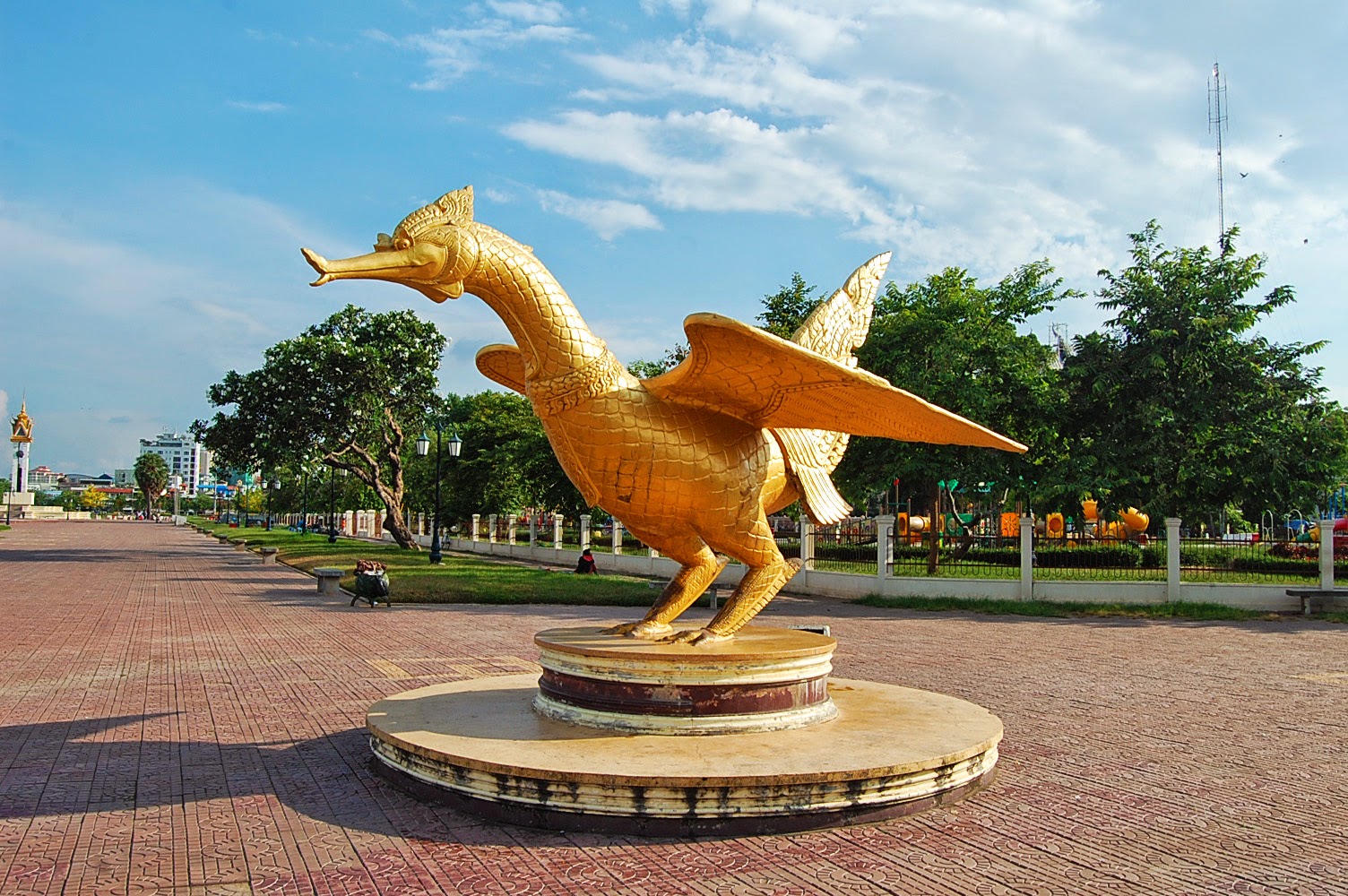
| The garuda, a divine bird-like creature from Cambodian mythology. |
 |
| The residence of the British Ambassador in Phnom Penh. For some reason I felt the desire to take a photo, not noticing the security guard telling me to stop. |
 |
| The only temple we visited in the city: Wat Phnom. |
That was it for Phnom Penh. I doubt we'll remember it as one of the highlights of our trip, but it was a nice enough place to spend a few days, and worth it alone for the Killing Fields and Genocide Museum. They are a tragic reminder of the horror and hardship that Cambodians have experienced in recent history, and only Dachau Concentration Camp in Germany and Seodaemun Prison in South Korea have left me feeling as saddened and disappointed by humankind.
We soon left the capital, heading south for the small town of Kampot. It was here that our journey took a more adventurous turn, and where we would start to fall in love with the Kingdom of Cambodia. More in the next post!