Monday, 25 February 2013

Lunar New Year at Namsangol Village

Back in November, I visited Bukchon Hanok Village, a small area in northern Seoul where visitors can explore traditional Korean houses, or hanok, preserved in a 600-year-old urban environment. However, Bukchon isn't Seoul's only hanok village. During Lunar New Year, or Seollal as it's known in Korea, Angela and I visited Seoul's other famous village, Namsangol, where several festivities and special events were taking place over the holidays. We saw several live performances, explored the village's traditional houses, and made a special Lunar New Year wish. Here are some photos we took.

Entering the village near Chungmuro metro station.
I still haven't worn a hanbok during my time in Korea, but I guess this is the next best thing.
We watched some traditional Korean dancing on the main stage just in front of the village.


Inside the walls of the actual village.
Here there were people lining up to write their New Year's wishes down.
Angela writes our wish down.
Couldn't have said it better myself!
Placing the wish on some string, alongside hundreds of other wishes. I've heard that it's common, during Lunar New Year, for people to attach their wish to a kite and then to set it flying. I don't know whether the string in the photo above was kite string, but I do like to imagine all those wishes fluttering into the sky after we left them.
Exploring the village further, we got to admire the quaint, traditional architecture of the hanok.


In this area people were stamping prayers onto pieces of paper.


During Seollal, people like to play various folk games, such as paengi, a spinning top game.

This old ajusshi was teaching people about hanja, the ancient Chinese characters sometimes incorporated into modern Korean writing.


We later returned to the stage to watch some more performances.


Exiting the village.
Re-entering the city.
Though not particularly big (you can easily explore the place in less than an hour), Namsangol Village is a pleasant little retreat if you need a peaceful break from the city, and Angela and I enjoyed sampling some traditional Seollal festivities there. If you're interested in visiting, the village is easily accessible and well-signposted from Chungmuro metro station on Lines 3 and 4.

Thursday, 21 February 2013

Dinner with the Yeos

Earlier this month South Korea celebrated one of its most important traditional holidays. Lunar New Year, or Seollal as it's known in Korea, is a three-day holiday that fell on February 10th this year. Unlike New Year's celebrations back home, Seollal is less a time for fireworks and rampant drinking, and more a time for family and friends. Shops close, cities slow down, and the country's highways become jam-packed as people flock to see their loved ones.

Though I don't have any family in Korea, my girlfriend Angela is half-Korean on her mother's side, and has several aunts, uncles and cousins living in Seoul. I felt very honoured when she told me that some members of her family had invited me along for their New Year's family dinner on the east side of the city. I had never met her family before; in fact I had never been in any Korean family's home, so it was a new and very momentous experience for me.

We spent several hours at their apartment, speaking to one another in broken Korean, broken English and various improvised gestures. Despite the language barrier, the Yeo family easily made us feel at home through their welcoming smiles, good humour and endless generosity. We enjoyed Angela's aunt's delicious homemade Korean food, and exchanged compliments, inquisitive questions, and stories about our lives. It made for an afternoon I'll never forget, filled with warmth, happiness, and some of the best Korean food I've eaten so far.

Angela and her family at the dinner table, which in true Korean style rested only a few inches from the floor.
Angela's aunt made a heavenly Seollal feast for us, including these delicious gunmandu: Korean fried dumplings covered in diced peppers and sweet sauce.
We also had tteokguk, a tasty rice-cake soup. According to tradition, upon eating the soup, you gain an extra year of life (in Korea, along with other East Asian cultures, your age increases not on your birthday but on the turn of the new year).
Various Korean dessert cakes.
Here's Angela with her aunt and uncle's two dogs, Pu-Chi and Pu-Pu. Their names are Chinese, and it's actually just a happy coincidence that the name "Pu-Chi" resembles the English term "pooch."


I felt so welcomed.

Angela's cousin, Eunyoung, lived in China for seven years, is fluent in Mandarin Chinese, and has mastered the preparation of traditional Chinese green tea.

I think Pu-Chi and Pu-Pu wanted in on the green tea sponge cake.
The view of eastern Seoul from the apartment window.

Eunyoung and Angela.

We spent some time looking through some of her family's photo albums.


I wish I could express in words how wonderful it was spending the afternoon with Angela and her family. Things never once felt awkward, and in fact I rarely even felt conscious of the cultural barrier: the simple act of spending time with family, enjoying food and talking about life, memories and hopes for the future, is so universal that it transcends language, tradition and other cultural quirks. Through their spirit of generosity and hospitality, the Yeos made me feel like one of their own, and I can't wait to spend more time with them over the course of this new year.

Tuesday, 19 February 2013

Goguryeo Blacksmith Village

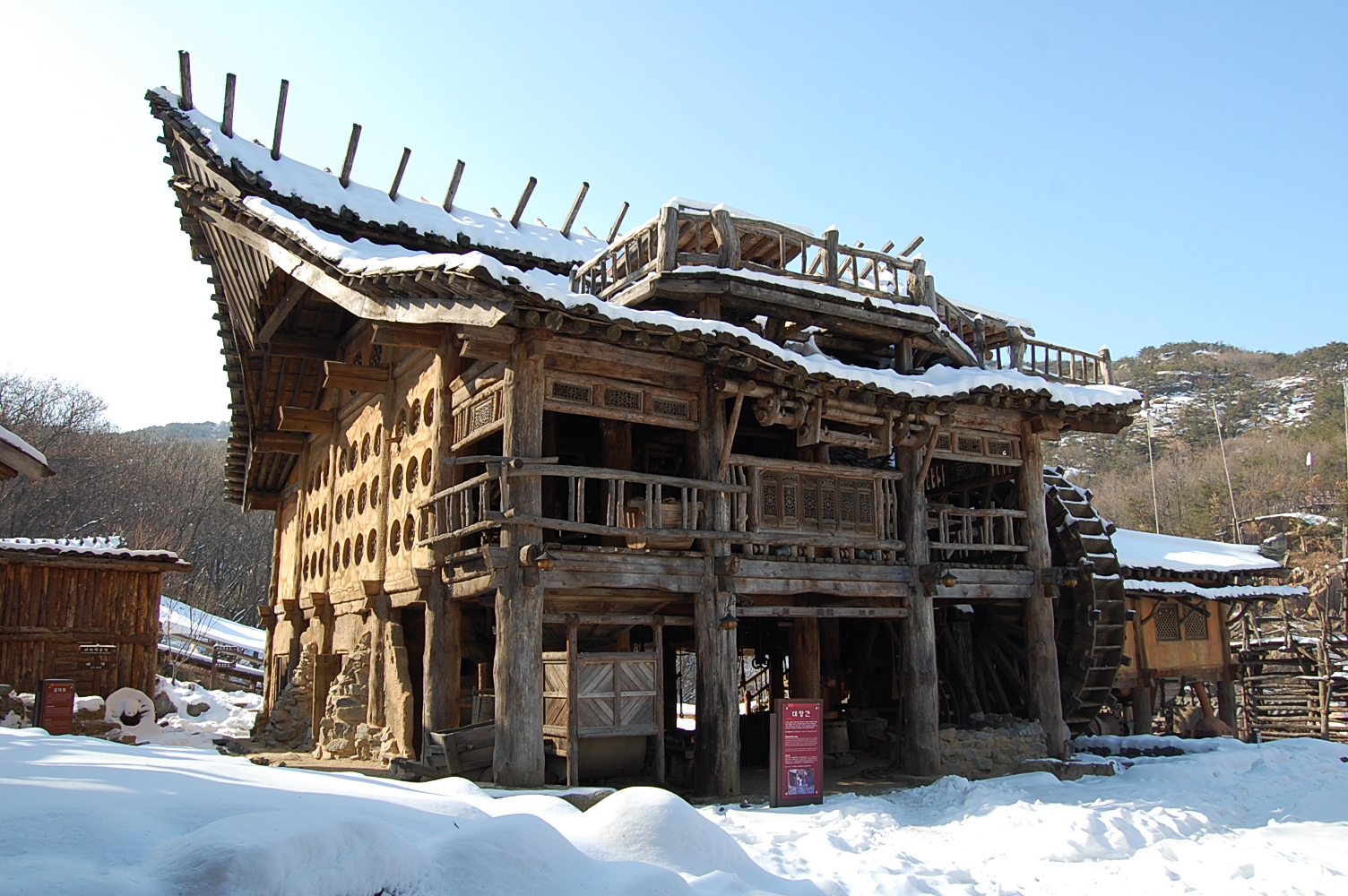
A couple of weekends ago I visited Goguryeo Blacksmith Village near Guri in eastern Seoul. Constructed originally as a set for several Korean TV dramas, the village was designed to resemble a village of the ancient Goguryeo Empire, which ruled over a large northern portion of the Korean peninsula from 37 BC to 668 AD. The Empire drew much of its military strength from its superior ironware technology, and many of its villages and cities centred around their blacksmiths and other metal-based industries. Goguryeo actually leant its name to the later Goryeo dynasty, from which the English word "Korea" stems.
Now the former film set is open to the public, and for 3000 Won you can explore this little village perched in a tiny valley in the outskirts of Seoul. I don't know if it was because I visited during the Lunar New Year weekend or because the village is relatively off the beaten track, but there was literally no one there when I went, and I got to have the whole village to myself. This is a very rare luxury in overpopulated, perpetually busy Korea, so I relished the experience. Here are some photos I took.

There's no metro station near the village so I had to get a bus to a quiet area just near the Han River.
I saw some cute little dogs near a shop by the road.

Jindo dogs, popularly used as outdoor guardians of homes and other buildings. They're usually really friendly though, so I don't know if they make very good guard dogs.

Following the icy path up to the village. 
A quiet car park. There were some people here for hiking in the nearby mountains, but no one was interested in the blacksmith village.


I wonder if real citizens of the Goguryeo Empire actually ate dinner underneath the rain and snow. I also wonder if they owned HD TVs like the one in the background above.

As you'd expect, there were lots of blacksmith tools lying around in the village.


The main blacksmith's shop. Its design was based on the ancient groundwork of a real blacksmith shop dug up in nearby Mount Acha.


More tools and weapons inside the blacksmith's shop. The inner geek in me immediately felt like I was walking through a real-life Skyrim.


Apparently, on nearby Mount Acha, you can see half a face in the rocks.
I couldn't see anything though. Too much snow! 
A cardboard cutout of characters from a Korean drama show that was filmed here.


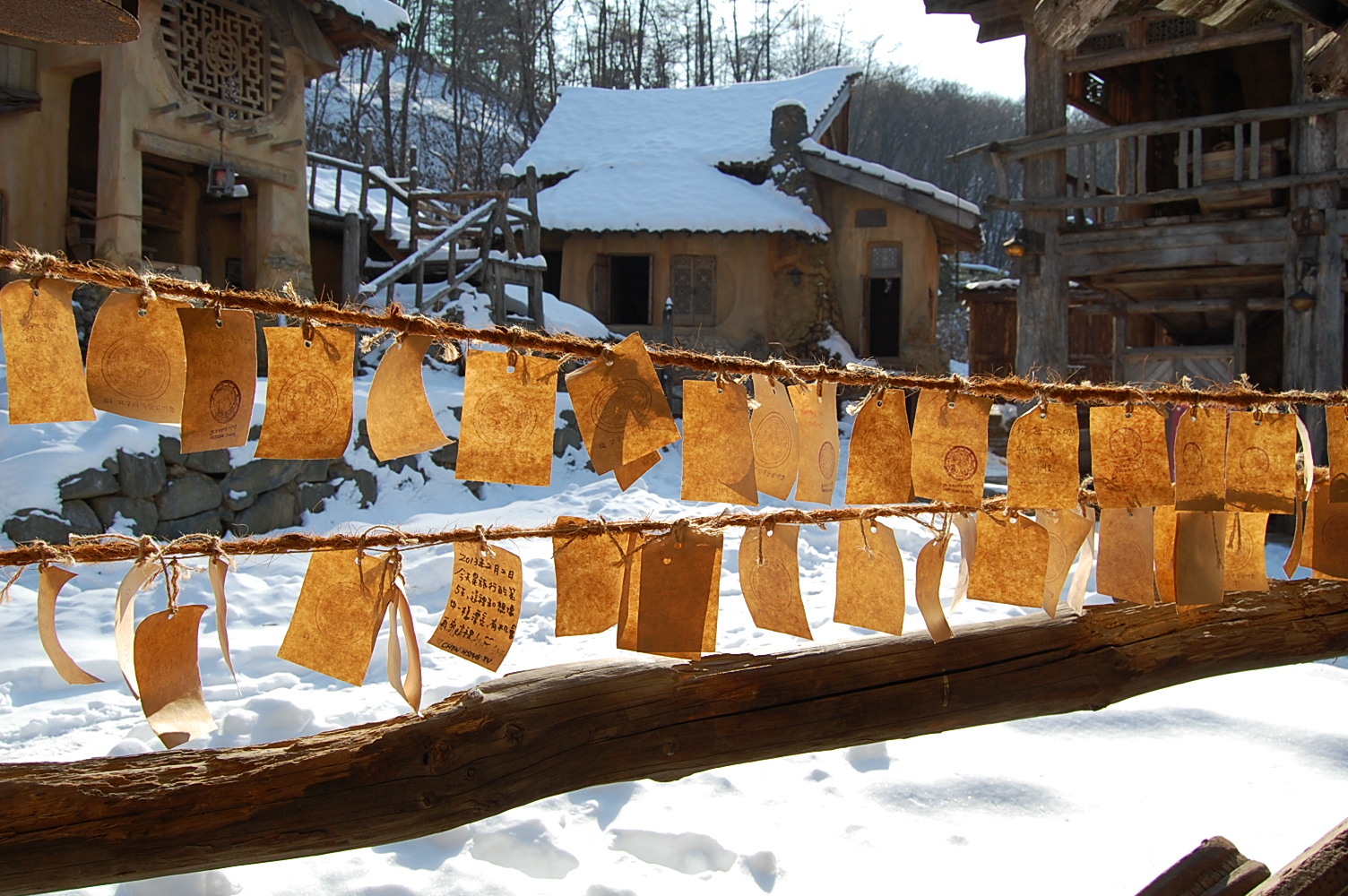
In one part of the village was some string where you could hang a piece of paper. I think you're probably supposed to write a wish...
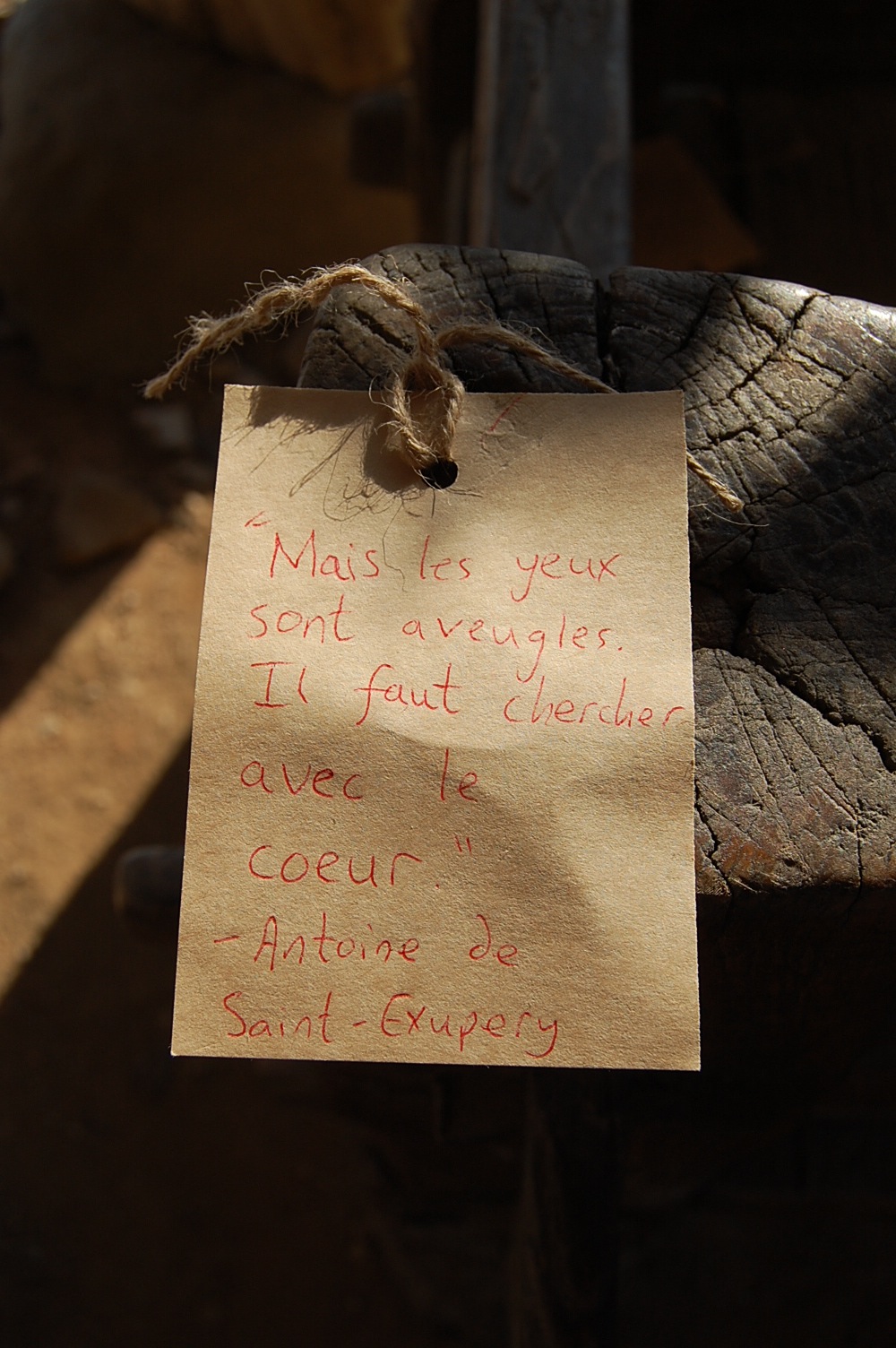
...but I just wrote a line from Le Petit Prince instead, because it's one of Angela's favourite quotes. 


I bought a bottle of water from an outdoors vending machine but it ended up being completely frozen due to the weather. It's times like these I really can't wait for winter to be over. 
After I left the blacksmith village I went for a short hike on nearby Mount Acha.

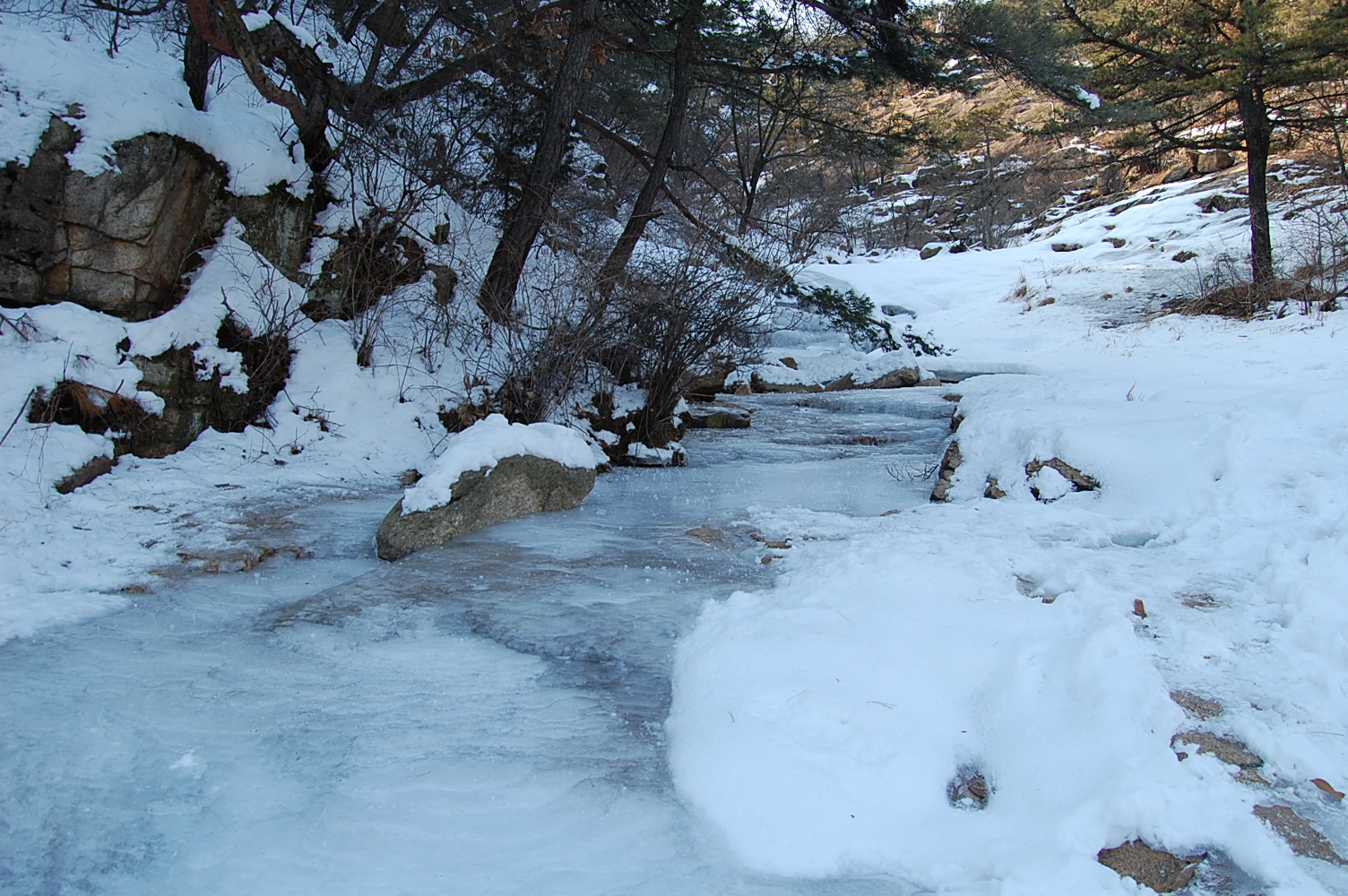
I followed the frozen river up in the side of the mountain.


Looking back down at Goguryeo Blacksmith Village.


On the way back down to the main road I passed what looked like a tiny shanty village made out of corrugated iron.
A very modern petrol station backdropped by very traditional Korean houses.
If you're interested in visiting the blacksmith village, you can find directions at this website. I'd say it's definitely worth a quick visit, especially as it's much quieter than most touristy places in Seoul, and you can also enjoy some hiking in the nearby mountains.