Sunday, 9 June 2013

Seoul's Olympic Park

In 1988, South Korea became the 20th nation - the 2nd in Asia, after Japan - to hold the Olympic games. Hosting such a major, worldwide event was seen as an opportunity for the country to showcase its miraculous, newly-industrialised economy to the international community, and to further boost tourism and overseas investment. Athletes from 159 nations competed in the games, which lasted 16 days and were presented under the theme of Peace, Harmony and Progress. South Korea won 12 gold medals and came in 4th place overall, its highest Olympic ranking to date.

Despite various countries boycotting the event (a pretty common occurrence for international tournaments held in the Cold War era), the games were widely considered a success. In fact, not only did they help establish Seoul as a leading global city, but they also directly led to the inauguration of a democratic government in the country. In 1987 the Korean people had held numerous political demonstrations against President Chun Doo-Hwan, who had led a decade-long dictatorship and been partly responsible for the Gwangju massacre of 1980. Fearful of the effect that these demonstrations might have on the games, the government issued President Chun out of power and held its first democratic elections at the end of 1987, leading to an Olympic games untainted by riots or totalitarianism.

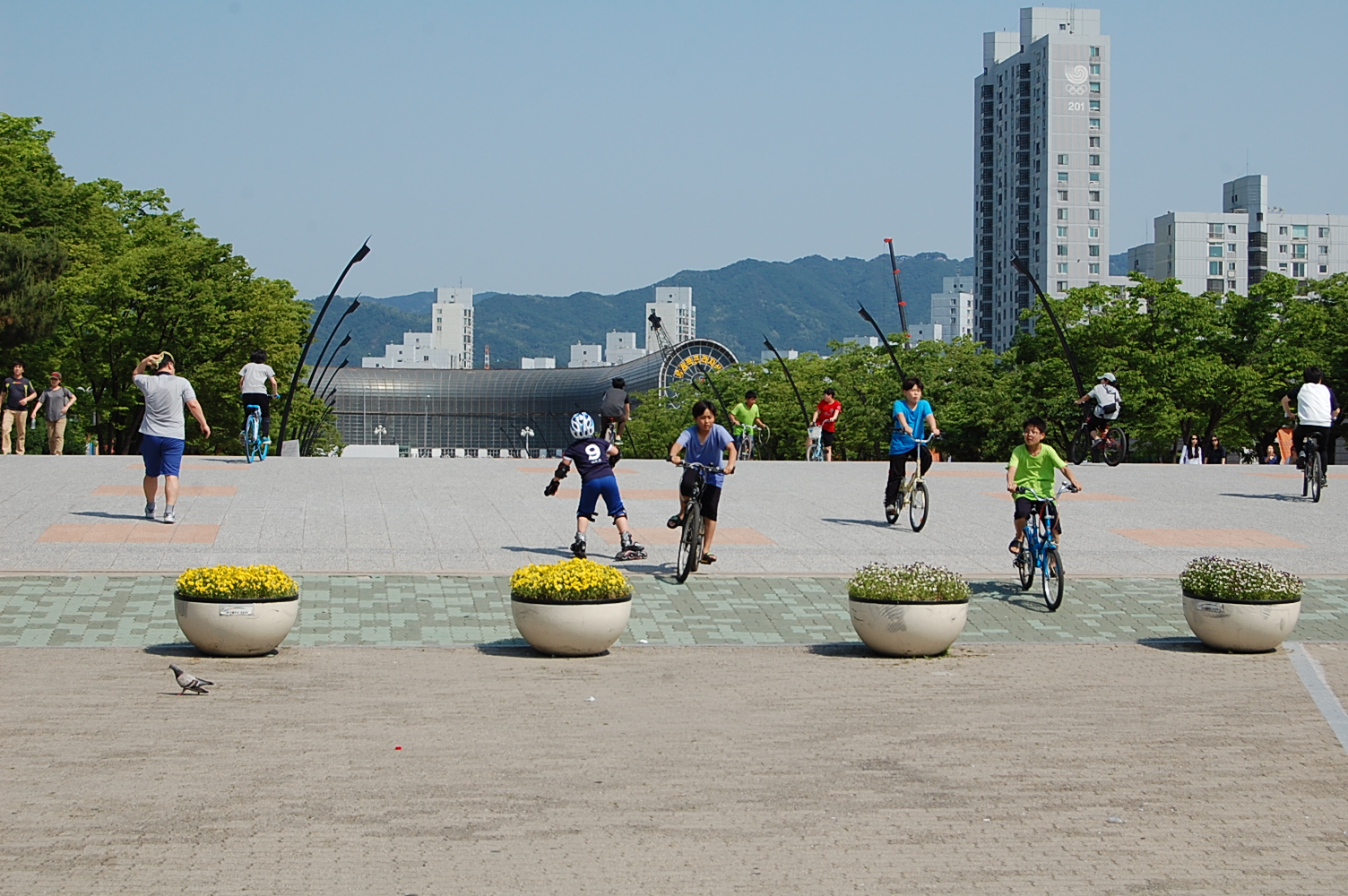
Now, 25 years later, the biggest remaining monument to the games is Seoul's Olympic Park, which is still in use as a recreational space. Filled with commemorative monuments, outdoor sculptures, and over 1000 square metres of natural greenery, it provides a pleasant place for citizens of Seoul to wander, relax, and spend time with family and friends. Most of its stadiums and gymnasiums are still intact and some are occasionally used to hold sporting events and performances. Angela and I visited the park on a recent sunday afternoon, taking some photos along the way.

Entering the park from Olympic Park station.

A piece of art called "Impersonation Station" by Dennis Oppenheim.
Angela walks on an acupuncture path.


The Olympic Gymnasium.
And the swimming pool.
Posing in front of a pretty fountain.


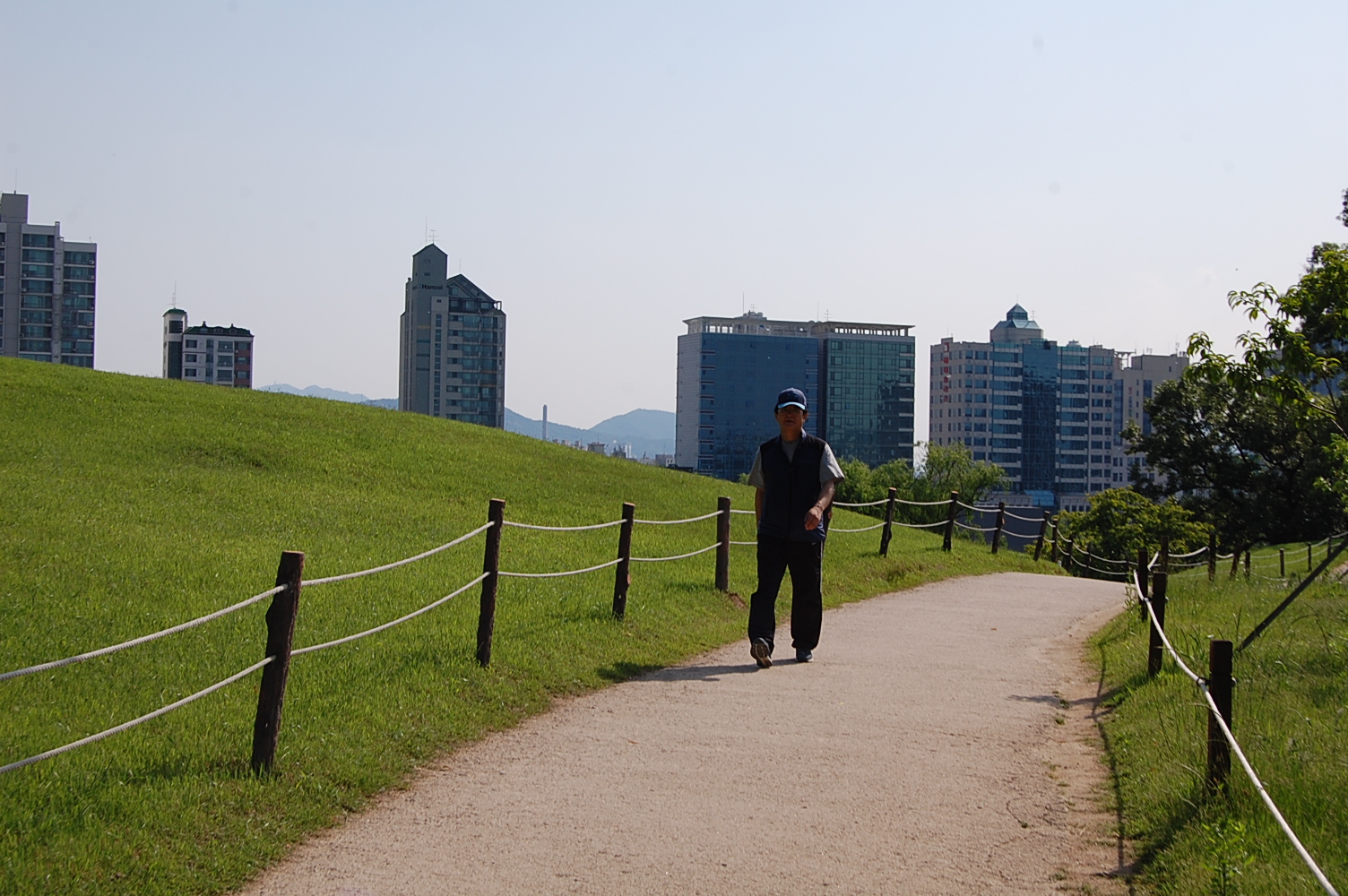
We walked along a pathway that ran along a crest of hills, providing great views of the park.


A pretty flower plantation.


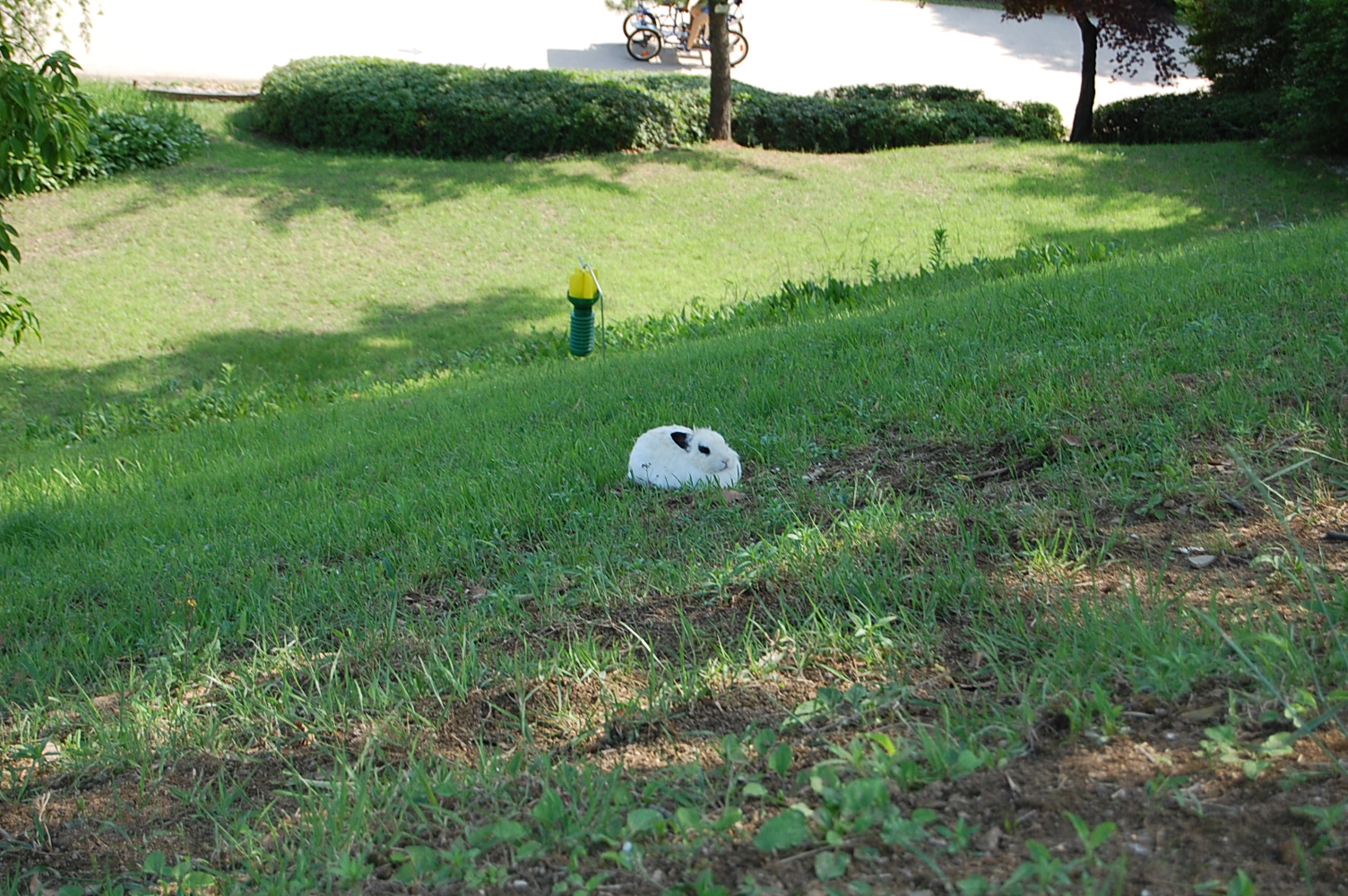
This little dude was chilling in the shade. Can't blame him - it was a hot day!


After much walking, we sat down for a while to watch this jazz-rock band.

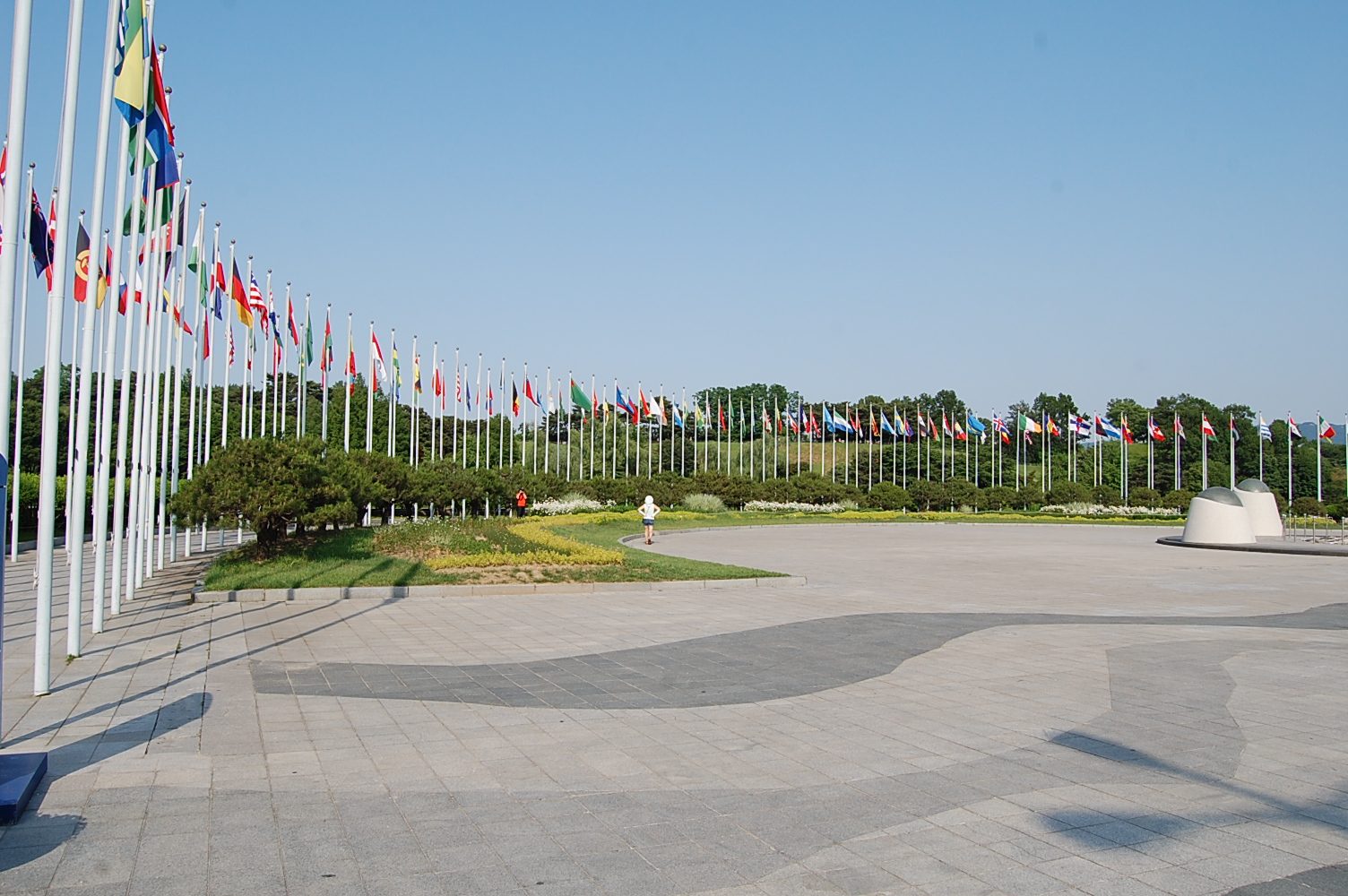
Approaching the Peace Gate.

The Olympic Flame, or a remnant of it.


If you're interested in visiting Olympic Park yourself, you can easily get there via Olympic Park station on Line 5, or via Mongchontoseong Station on Line 8.

Friday, 7 June 2013

Angela's Birthday

Angela celebrated her 25th birthday last saturday, so I thought I'd make a post about how we spent the day. Her Korean family took us out for a meal in the afternoon, and in the evening we partied on Angela's rooftop and then in the clubs of Hongdae.

Angela's cousin and aunt prepare the birthday cake.
Angela's cousin Eun-yeong bought us a gift of matching couple's wristwatches. While we're generally averse to the concept of couple's clothing, these seemed small and subtle enough that we were very happy to make an exception. In fact, we were immensely grateful for such a thoughtful and expensive gift.
Angela hugs Eun-Yeong.
Angela and her aunt.
And with her uncle.
Sam-Cheon pops open the champagne.

Cutting the cake.
Me, Angela and Eun-Yeong, just before leaving the restaurant.
That evening, we hooked up with Angela's friends on her rooftop, ate pizzas, and "shotgunned" cans of beer.
We later went to a club in Hongdae called Meet Market, which showed several provocative burlesque performances.
Angela with a scantily-clad partygoer.
Angela and Joselyn hang out outside the club.
All in all, it was an exciting day. Angela enjoyed all her birthday gifts, we had great fun clubbing in Hongdae, and it was such a pleasure to see her family again that afternoon.

Thursday, 6 June 2013

Banpo Double-Decker Rainbow Bridge

Crossing the Han River in downtown Seoul are dozens of long bridges that connect the two halves of the city. One of the most famous is Banpo Bridge, which is unusual not only because it runs directly over the top of another bridge, forming a double-decker structure, but because it also holds an impressive rainbow fountain display during the warmer months of the year.
I've visited the bridge a few times, and decided to post some photos here. The first group of photos I took back in early winter when I visited with my friend Hollis, while the second group I took a couple of weekends ago with Angela.

Banpo Bridge runs directly over Jamsu Bridge. Together, they form a double-decker structure, allowing both cars and pedestrians to cross the Han.
Surrounding the banks of the river are some pretty parks where people exercise and admire the nearby scenery.


Over near the south bank are some floating islands, used to house various exhibitions and performances.
Crossing the river via Jamsil Bridge, which runs directly beneath Banpo Bridge.

A closer look at the floating islands, which Hollis and I decided to explore.


Move forward half a year, and people are gathering near the bridge on a warm spring evening. Soon the rainbow fountain show will begin.
The show takes place several times a day from April to October. We decided to watch an evening performance since the colours are more pronounced then.


The fountain moves in hundreds of different configurations, some of which evoke waving willow branches.
There was quite a big crowd gathering to watch.
We decided to cross Jamsu Bridge to see the fountains and lights from underneath.


Near the floating islands on the south bank.

The Banpo Bridge fountain display is definitely worth adding to any Seoul sightseeing itinerary. If you'd like to find out performance times, check out Korea's official tourist site.

Monday, 3 June 2013

Spa Land - Korea's Best Jjimjilbang?

Spa Land - Korea's Best Jjimjilbang
Back in March, I made a post about my first time in a jjimjilbang, and since then I've been to several more of these lavish Korean-style bathhouses. Dragon Hill Spa remains my favourite one in Seoul, but Angela and I recently visited an even better jjimjilbang in Busan called Spa Land. Having been there last year, Angela was adamant about revisiting, and I can see why. It has a huge variety of different saunas, bathing areas and other facilities, is laid out in clean, contemporary interiors of polished marble staircases and oak-pannelled walls, and it cost a mere 13 dollars each for the four hours we spent there.