Sunday, 26 May 2013

Haedong Yonggunsa - Busan's Coastal Temple

During our recent trip to Busan, Angela and I visited Haedong Yonggunsa, a temple located just outside the city. It is one of the more unique temples we've visited in the country. Whereas most Korean temples are built in the mountains, Yonggunsa is situated on a rocky, windswept coastline, splashed by waves and accessible only via cliffside paths. As it was Buddha's Birthday, the whole complex was decorated in multicoloured lanterns, and the temple was packed with visitors, so much so that we had to line up for half an hour just to get in.

Near the temple is a marketplace where you can buy souvenirs and street food.
Statues representing the 12 signs of the Chinese zodiac.
This nine-tiered pagoda was built in memory of victims of car accidents. There is a black tyre right by the pagoda, where people can pray not to have a car accident. 
The path down to the temple.

Many people left donations at statues in and around the temple grounds.
Our first view of the temple.


Underneath the lanterns.


We climbed up a staircase carved into the cliffs and found some great views of the coastline.


Exiting the temple.
Haedong Yonggunsa is definitely one of the more distinctive temples you can find in Korea. It's also pretty easy to reach from Busan. We took taxis from Haeundae, and if it hadn't been for heavy holiday traffic, it would have been a quick ten-minute ride.

Friday, 24 May 2013

A Weekend in Busan: Part 2

Click here to read Part 1 of this post if you haven't already.

From the 40 Steps district we headed for Yongdusan Park, which is dominated by Busan Tower.
Some cool graffiti we saw on the way into the park.


Though we didn't go to the top of Busan Tower, we still got some great views of the city from the top of the hill in the centre of the park.


A musical performance on dulcimers (or something similar).
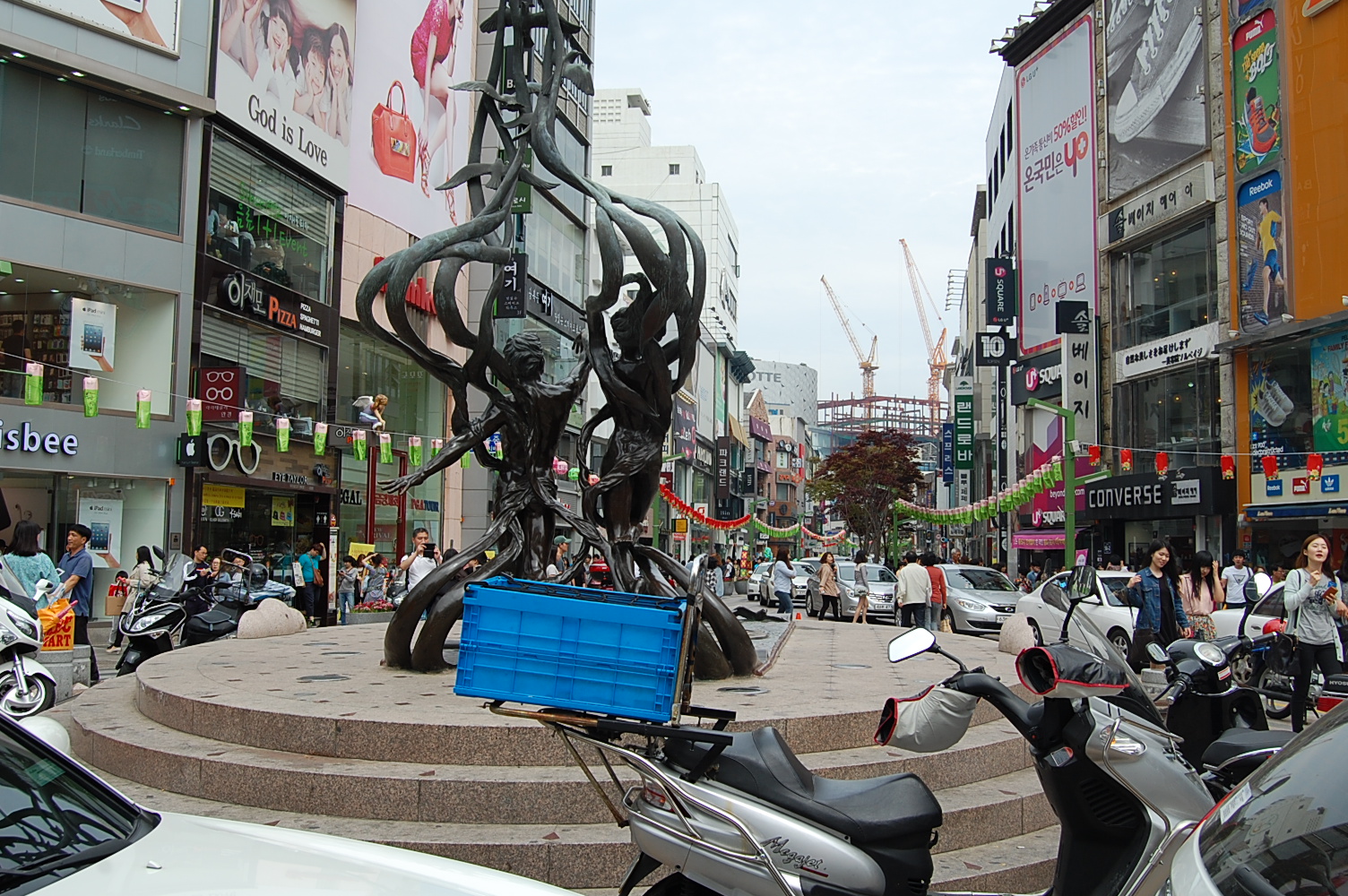
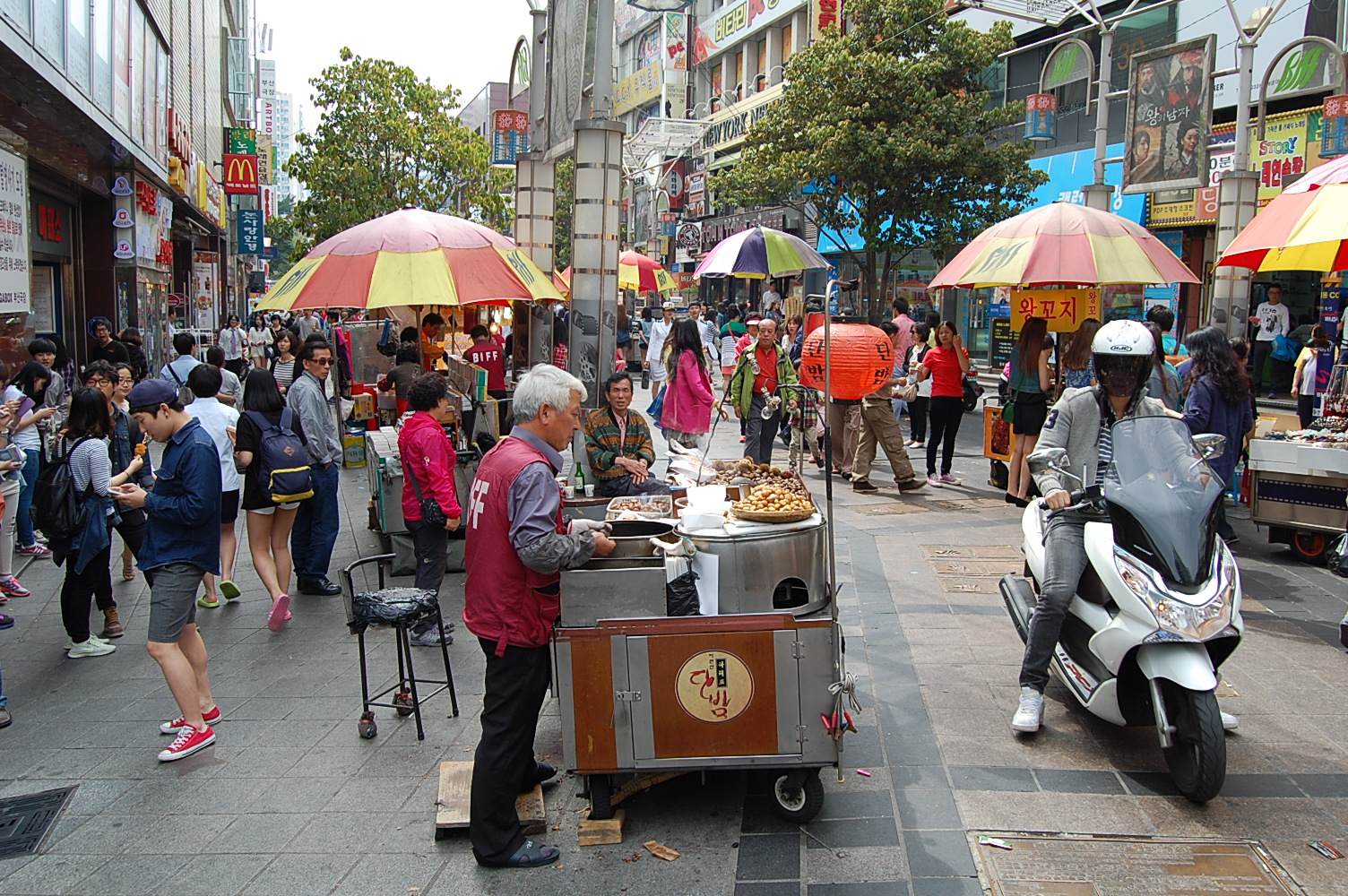
From the park we entered Nampo-Dong, a popular district famed for its shops and restaurants.


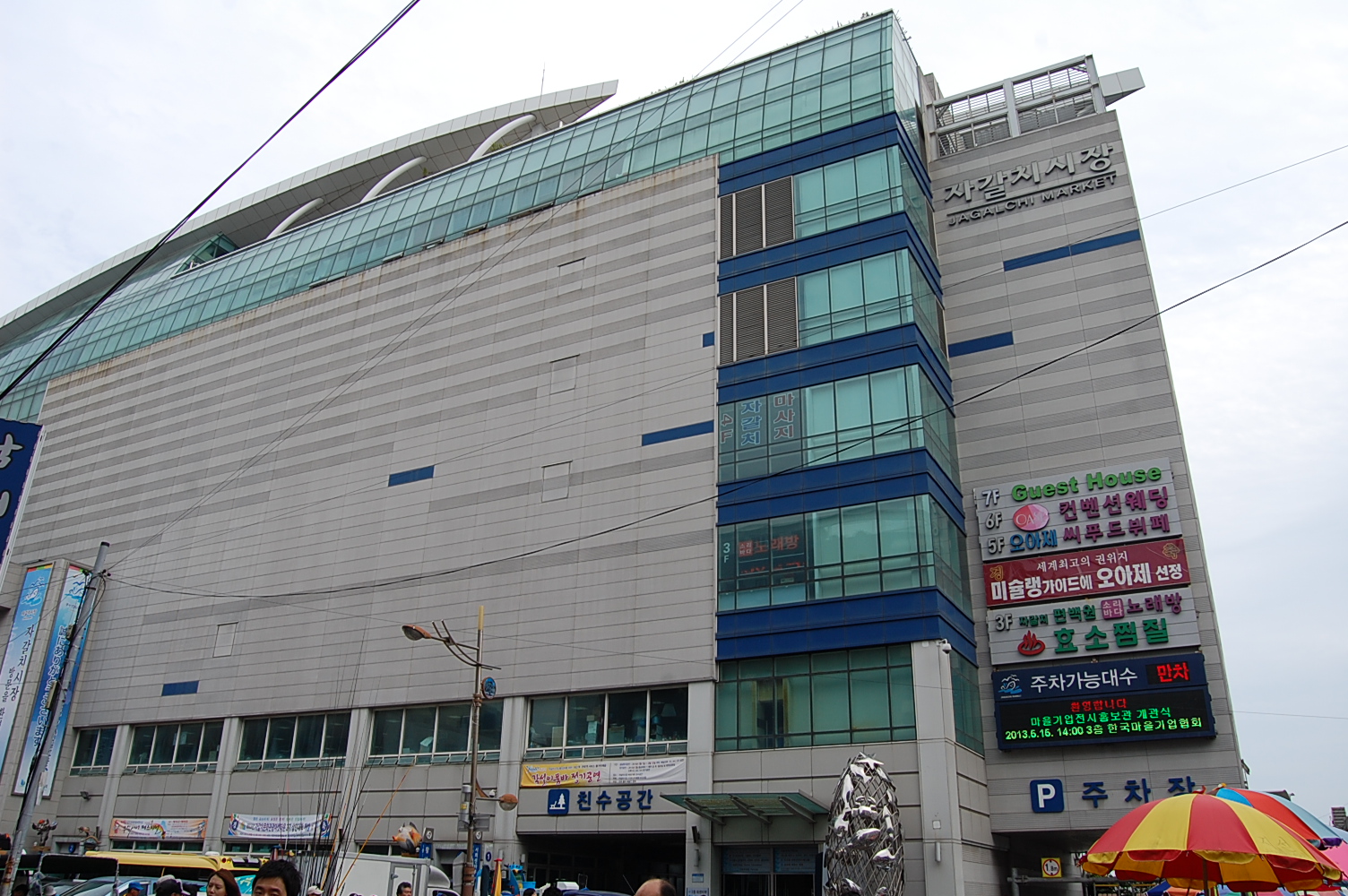
Then we explored Jagalchi Fish Market, Korea's largest seafood market.
This fish market seemed more modern and clean than the one I visited in Seoul (Noryangjin), though it was just as gruesome at times. I've since written a more comprehensive post on this place, including details of our first time eating still-wriggling-on-the-plate octopus!
We ended the afternoon by wandering the streets of Gamcheon, a suburban village made up of multicoloured houses. Once again, such a photogenic place deserves it's own blog entry, so click here to see more!
A traditional building we saw just as we left Gamcheon.
We spent Saturday evening at Gwangalli Beach, which is not as popular as Haeundae Beach, but a better place to relax, we thought. It had lots of cool bars and restaurants lining the seafront, and the view of the nearby bridge made for a much more unique setting.
Drinking Long Islands at a bar overlooking the beach.
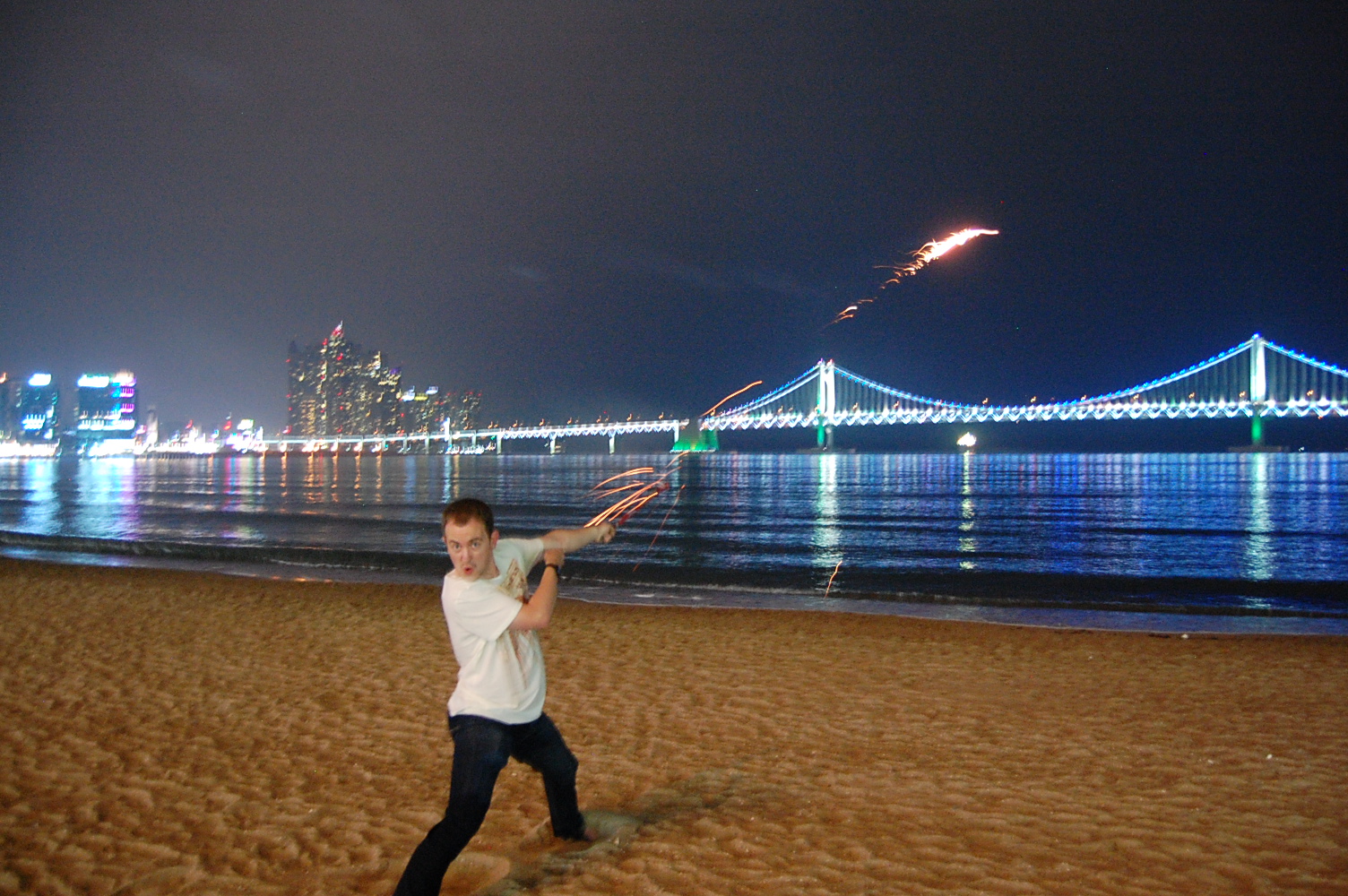
The stunning view of Gwangan Bridge, which stretches from left to right, parallel with the beach.
As with Haeundae Beach, at night lots of people set of fireworks and sparklers.


We had to get in on the action too.
Attempting to blow up Gwangan Bridge.


I'm so good at sparkling I can do it in my sleep.

On Sunday, our last day, we spent the afternoon in Spa Land, the best jjimjilbang either of us has ever been to, and which will also get its own blog entry somewhere down the line. After that we headed back to Seoul on the KTX. Three days really wasn't enough to truly get to know Busan, and I'd love to go back there before I leave Korea. The chilled out atmosphere was such a nice break from the fast pace of Seoul, and there seemed to be lots of cool restaurants, beaches, and sights to see. If I were to teach for another year in this country, I'd probably choose Busan to live in. For now, I can only look forward to my next visit there.